
Are you tired of your iPhone screen locking too quickly or staying on longer than you want? Controlling the auto lock feature on your iPhone can save you time, protect your privacy, and improve battery life.
But if you’re not sure how to adjust these settings, it can be frustrating. You’ll discover simple, step-by-step tips to take full control of your iPhone’s auto lock. Keep reading to make your phone work exactly the way you need it to.

Credit: www.yahoo.com
Auto Lock Basics
Auto Lock helps keep your iPhone secure by turning off the screen after some time. It saves battery and protects your data from others.
You can change Auto Lock settings to fit your needs. This guide explains what Auto Lock does and why you might want to customize it.
What Auto Lock Does
Auto Lock stops your iPhone screen from staying on too long. It does this by locking the phone after a set time.
- Turns off the screen after inactivity
- Protects your phone from unauthorized access
- Helps save battery life
- Prevents accidental taps or swipes
Why Customize Auto Lock
Changing Auto Lock settings gives you control over how long your screen stays active. This can help in different situations.
| Benefit | Explanation |
| Longer Auto Lock Time | Good for reading or using apps without interruptions |
| Shorter Auto Lock Time | Better for saving battery and security |
| Never Auto Lock | Useful when using the phone for long tasks, but risks battery drain |
Accessing Auto Lock Settings
Auto Lock controls how long your iPhone screen stays on without use. Adjusting this setting helps save battery and protect your phone.
This guide shows how to find and change Auto Lock on your iPhone easily.
Using The Settings App
Start by opening the Settings app on your iPhone. This app has all the controls for your phone’s functions.
- Look for the gray gear icon on your home screen.
- Tap the icon to open the Settings menu.
- Scroll to find the option related to screen settings.
Navigating To Display & Brightness
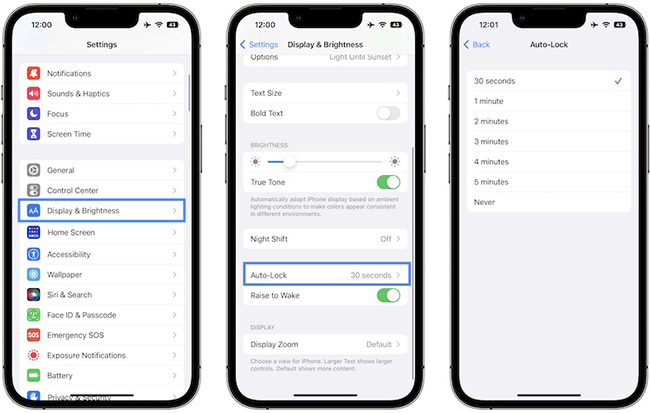
Inside Settings, find and tap the “Display & Brightness” option. This section holds the Auto Lock setting.
| Setting | Purpose |
|---|---|
| Brightness | Adjust screen light level |
| Auto Lock | Set time before screen locks |
| Text Size | Change the font size |
Tap “Auto Lock” to select how long your iPhone screen stays active before it locks automatically.
Changing Auto Lock Duration
You can change the auto lock time on your iPhone to save battery. It also helps keep your phone secure.
This guide explains how to adjust the auto lock duration easily in your settings.
Available Time Options
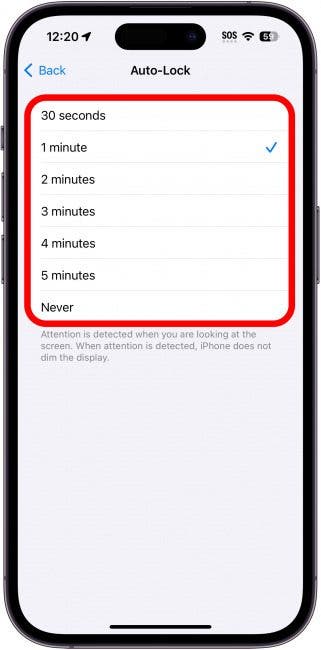
Your iPhone offers several time options for auto lock. You can pick the one that fits your needs.
- 30 Seconds
- 1 Minute
- 2 Minutes
- 3 Minutes
- 4 Minutes
- 5 Minutes
- Never
Choosing The Right Duration
Pick a duration that balances battery life and convenience. Short times save power but lock your screen faster.
| Duration | Best For |
|---|---|
| 30 Seconds | Saving battery, quick locking |
| 1-2 Minutes | Regular use, good balance |
| 3-5 Minutes | Short breaks without unlocking |
| Never | When you want screen always on |
Disabling Auto Lock
Auto Lock on iPhone turns off the screen after a set time. This helps save battery and keeps your phone secure.
You can disable Auto Lock if you want the screen to stay on longer. This guide shows you how to do that.
When To Turn It Off
Turn off Auto Lock if you need your screen to stay on. For example, when reading or using recipes.
It is useful during presentations or when showing something to others on your phone.
- Reading long texts without touching the screen
- Following step-by-step instructions
- Watching videos without interruptions
- Using apps that require constant display
Potential Battery Impact
Disabling Auto Lock keeps the screen on all the time. This uses more battery power than usual.
Your iPhone battery will drain faster if the screen stays lit for a long time.
- Screen uses most battery power
- Longer screen time means faster battery drain
- Better to turn Auto Lock back on after use
- Adjust brightness to save more battery
Using Guided Access To Control Lock
Guided Access helps you control your iPhone’s auto lock. It keeps the screen on while you use one app.
This feature is useful if you want to prevent the phone from locking automatically during specific tasks.
Setting Up Guided Access
To turn on Guided Access, open Settings and go to Accessibility. Find Guided Access and enable it.
- Go to Settings > Accessibility > Guided Access.
- Turn on Guided Access.
- Set a passcode to end the session.
- Open the app you want to use.
- Triple-click the side button to start Guided Access.
You can adjust options like disabling the sleep button or touch screen while Guided Access is active.
Benefits For Auto Lock Control
| Benefit | Description |
| Prevents Auto Lock | Keeps your screen on during tasks without timing out. |
| Focus on One App | Limits device use to a single app, avoiding distractions. |
| Control Screen Functions | Disables hardware buttons for better control. |
| Protects Privacy | Requires a passcode to exit Guided Access mode. |
Troubleshooting Auto Lock Issues
Auto Lock on your iPhone helps save battery life. It also ensures your device is secure when not in use. Sometimes, Auto Lock might not work as expected. This guide will help you troubleshoot common issues.
Understanding the reasons behind Auto Lock issues can make your iPhone experience smoother. Let’s explore common problems and fixes.
Auto Lock Not Working
If your iPhone does not lock automatically, check the settings. Ensure Auto Lock is enabled. Go to Settings > Display & Brightness > Auto Lock. Choose a time limit.
Sometimes, apps can interfere with Auto Lock. Check if any app is keeping your screen active. Close unnecessary apps running in the background.
- Ensure Auto Lock is not set to “Never”.
- Check for apps keeping the screen active.
- Restart your iPhone to refresh settings.
Resetting Settings
If Auto Lock issues persist, resetting settings can help. Resetting will not erase data. It will only restore default settings.
To reset, go to Settings > General > Transfer or Reset iPhone > Reset > Reset All Settings. This step might fix the Auto Lock problem.
- Go to “Settings” and select “General”.
- Tap “Transfer or Reset iPhone”.
- Choose “Reset” and tap “Reset All Settings”.
Tips For Battery Optimization
Managing your iPhone’s auto lock settings can help save battery life. It’s important to find a balance that suits your daily usage.
Auto lock affects how long your screen stays on when not in use. Adjusting this can significantly impact battery performance.
Balancing Auto Lock And Battery Life
Finding the right auto lock duration is key to optimizing battery life. Shorter times save battery, while longer times offer more convenience.
- Go to Settings on your iPhone.
- Select Display & Brightness.
- Tap Auto Lock and choose a shorter time.
- Test to see if the new setting meets your needs.
Other Display Settings To Adjust
There are additional settings that can help improve battery life. Adjusting these can further enhance your iPhone’s performance.
- Reduce screen brightness manually.
- Turn on Auto-Brightness for automatic adjustments.
- Use Night Shift to reduce eye strain and save energy.
Credit: www.tuneskit.com
Credit: www.iphonelife.com
Frequently Asked Questions
How Do I Change Auto Lock Time On Iphone?
Go to Settings > Display & Brightness > Auto-Lock. Choose your preferred time from 30 seconds to 5 minutes or Never.
Can I Disable Auto Lock On Iphone Permanently?
Yes, select Never in Auto-Lock settings. This stops your iPhone from locking automatically.
Why Is Auto Lock Not Working On My Iphone?
Check if Low Power Mode is on. It forces auto lock to 30 seconds to save battery.
Does Auto Lock Affect Iphone Battery Life?
Yes, shorter auto lock times save battery by turning off the display sooner.
Conclusion
Controlling auto lock on your iPhone keeps your screen active as you want. It helps save battery and protects your privacy. Changing settings is quick and easy in the Display & Brightness section. Adjust the time to fit your daily use and needs.
Small changes make your iPhone work better for you. Try different settings until you find the best one. Stay in control of your device with simple steps. Your iPhone becomes more convenient and user-friendly this way.