
Have you ever been left stranded because your car wouldn’t start? One of the most common reasons is a dead auto battery.
But how long do auto batteries really last? Knowing the answer can save you from unexpected breakdowns and costly repairs. You’ll discover the key signs that your battery is wearing out, how to extend its life, and when it’s time to replace it.
Keep reading to make sure your car stays reliable every time you turn the key.
Battery Lifespan Factors
Auto batteries do not last forever. Many things affect how long they work well.
Knowing these factors helps you care for your battery and avoid surprises.
Types Of Auto Batteries
Different batteries last different times. The common types are lead-acid, AGM, and lithium-ion.
| Battery Type | Average Lifespan |
| Lead-Acid | 3 to 5 years |
| AGM (Absorbent Glass Mat) | 4 to 6 years |
| Lithium-Ion | 5 to 8 years |
Impact Of Driving Habits
How you drive affects battery life. Short trips may not fully charge the battery.
- Frequent short drives reduce battery charge
- Long drives help keep the battery charged
- Turning off lights and accessories saves battery power
- Using the car regularly prevents battery drain
Climate And Weather Effects
Extreme weather can shorten battery life. Heat speeds up battery wear. Cold slows its ability to start the engine.
- Hot climates cause faster battery fluid evaporation
- Cold climates reduce battery power output
- Humidity can cause corrosion on battery terminals
Maintenance And Care
Proper care extends battery life. Check the battery regularly and keep it clean.
- Keep terminals clean and free of corrosion
- Ensure battery is securely mounted
- Check electrolyte levels if applicable
- Avoid leaving lights or accessories on when engine is off
- Test battery voltage regularly
Signs Of A Dying Battery
Car batteries do not last forever. Over time, they lose their ability to hold charge. Knowing the signs of a dying battery helps you avoid getting stranded.
Watch for early warning signs to replace your battery on time. This keeps your car running smoothly.
Slow Engine Crank
If your engine cranks slowly when you start the car, the battery may be weak. It struggles to provide enough power to start the engine.
You might hear a clicking sound or the engine may take longer to turn on than usual.
Dim Lights And Electrical Issues
When the battery is dying, your car’s lights may look dimmer than normal. This includes headlights and interior lights.
Other electrical parts like the radio or power windows may work slower or stop working altogether.
Warning Lights On Dashboard
Your dashboard might show a battery warning light. This symbol looks like a battery or says “ALT” or “GEN.”
It signals that the battery or charging system has a problem. Don’t ignore this light as it means the battery may fail soon.
Corrosion And Physical Damage
Look at the battery terminals for white or greenish powder. This is corrosion and can stop the battery from charging properly.
Also check for cracks or leaks on the battery case. Physical damage weakens the battery and makes it unsafe.
Testing Battery Health
Auto batteries wear out over time and need testing to check their condition. Testing helps know if a battery can still start your car reliably.
This guide explains three ways to test battery health: using a multimeter, load testing, and professional battery testing.
Using A Multimeter
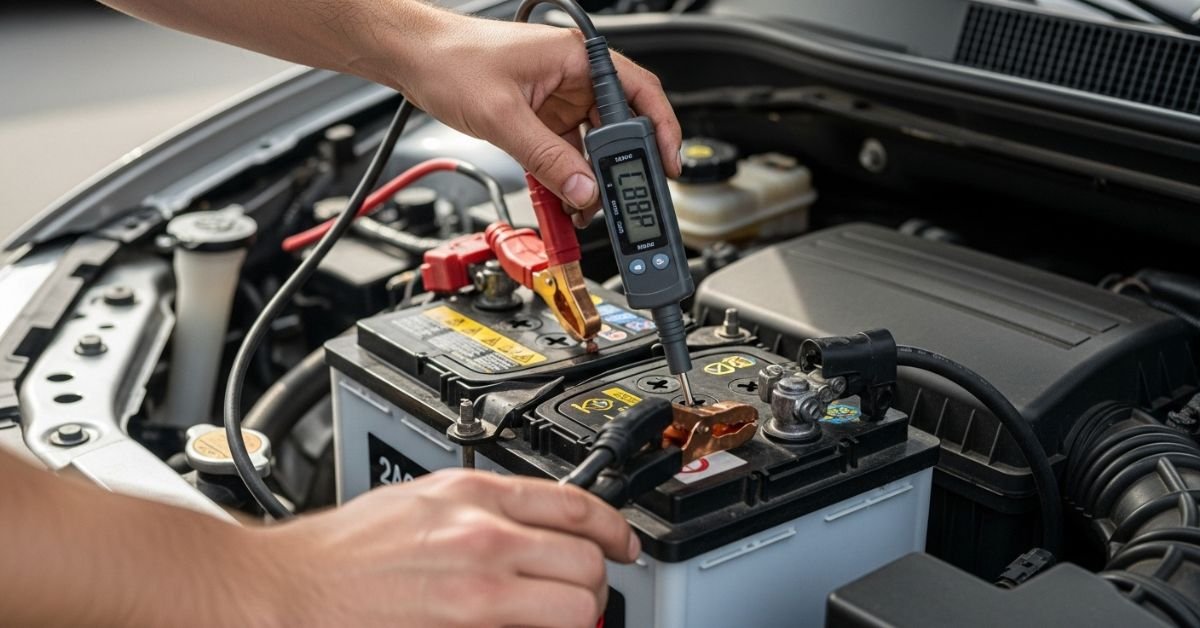
A multimeter measures the battery’s voltage to show its charge level. A healthy battery usually reads about 12.6 volts when fully charged.
Follow these steps to test with a multimeter:
- Turn off the car and all accessories.
- Set the multimeter to DC voltage mode.
- Connect the red probe to the positive battery terminal.
- Connect the black probe to the negative terminal.
- Read the voltage on the multimeter display.
Load Testing Methods
Load testing checks how well the battery performs under stress. It simulates the power needed to start the engine.
| Test Type | What It Measures | Result Meaning |
| Cold Cranking Amps (CCA) | Battery ability to start engine in cold | High CCA means strong starting power |
| Voltage Drop Under Load | Voltage level during heavy power use | Voltage below 9.6V shows weak battery |
| Internal Resistance | Battery’s resistance to current flow | High resistance means poor condition |
Professional Battery Testing
Auto shops use special tools to test battery health quickly and accurately. These tests combine voltage, load, and other checks.
Professional testers give a full report on battery condition. They may recommend charging, repair, or replacement.
- Quick and reliable results
- Detect hidden battery problems
- Include charging system check
Credit: companycarpool.com
When To Replace Your Battery
Your car battery powers the engine and electronics. Knowing when to replace it helps avoid breakdowns.
Batteries wear out over time. Signs of failure and age guide the right replacement time.
Typical Lifespan Expectations
Most car batteries last between three and five years. Extreme weather can shorten this time.
- Cold climates may reduce battery life.
- Hot climates can cause faster fluid evaporation.
- Frequent short trips prevent full charging.
- Proper maintenance extends battery life.
Age Vs Performance Considerations
Batteries lose power as they age. A battery over four years old may struggle to start the car.
| Battery Age | Performance Level | Replacement Advice |
| 0-2 years | High | Check regularly |
| 3-4 years | Moderate | Test capacity often |
| 5+ years | Low | Replace soon |
Cost-benefit Analysis
Replacing a battery early can save money. Old batteries cause more problems and repairs.
- Test battery charge and health yearly after three years.
- Replace battery if it fails a load test.
- Consider replacement before winter or hot summer.
- Balance replacement cost against risk of getting stranded.
Replacement Tips
Auto batteries do not last forever. Knowing when and how to replace them saves time and money.
Follow these tips to choose, install, and care for your new battery safely and effectively.
Choosing The Right Battery
Pick a battery that fits your car’s make and model. Check the size, power, and type for compatibility.
- Check your vehicle’s manual for battery specifications
- Match the battery group size to your car’s tray
- Consider cold cranking amps (CCA) for cold climates
- Look for batteries with good warranty coverage
Installation Best Practices
Proper installation helps your battery work well and last longer. Follow safety rules and use the right tools.
- Turn off the engine and remove keys before starting
- Disconnect the negative terminal first to avoid sparks
- Remove the old battery carefully and clean the tray
- Place the new battery securely in the tray
- Connect the positive terminal first, then the negative
- Check that all connections are tight and clean
- Start the engine and test the battery’s performance
Disposing Of Old Batteries Safely
Old batteries contain harmful chemicals. Dispose of them properly to protect the environment.
You can return old batteries to:
- Auto parts stores with recycling programs
- Local hazardous waste disposal sites
- Community recycling events
Never throw batteries in the trash or leave them outdoors.
Extending New Battery Life
Take simple steps to keep your new battery healthy and extend its life.
| Tip | How It Helps |
| Keep terminals clean | Prevents corrosion and improves connection |
| Turn off lights and accessories when off | Reduces battery drain |
| Drive regularly | Keeps battery charged |
| Check battery voltage | Detects issues early |
| Avoid short trips | Allows full recharge cycles |
Credit: www.acima.com

Credit: www.youtube.com
Frequently Asked Questions
How Long Do Car Batteries Typically Last?
Car batteries usually last between 3 to 5 years. This depends on driving habits, climate, and maintenance. Extreme temperatures and frequent short trips can reduce battery life.
What Factors Affect Auto Battery Lifespan?
Battery life is influenced by temperature, driving frequency, and vehicle type. Poor maintenance and leaving lights on also reduce lifespan. Regular checks help extend battery performance.
How Can I Tell If My Battery Is Failing?
Signs include slow engine crank, dim lights, and warning lights on the dashboard. If the battery is over 3 years old, get it tested regularly for safety.
Does Climate Impact Auto Battery Durability?
Yes, hot weather accelerates battery fluid evaporation, causing damage. Cold weather reduces battery capacity temporarily. Both extremes shorten overall battery life if unmanaged.
Conclusion
Auto batteries usually last between three and five years. Cold weather and frequent short trips can shorten their life. Regular checks help spot problems early. Clean battery terminals prevent corrosion and maintain power. Replace your battery when your car struggles to start.
Taking care of your battery saves time and money. Stay aware of signs like dim lights or slow starts. A healthy battery keeps your car running smoothly every day.