
Have you noticed the ABS light glowing on your truck’s dashboard? It’s a warning you can’t ignore.
That little light might seem harmless, but it’s telling you something important about your truck’s braking system. If you want to stay safe on the road and avoid costly repairs, you need to understand why the ABS light is on and what it means for your truck.
Keep reading—this guide will help you figure out what’s going on and what steps you should take next.
Credit: www.toyotanation.com
Common Abs Light Causes
The ABS light on your truck tells you there is a problem with the anti-lock brake system. This system helps keep your truck safe during hard braking. Knowing why the light is on can help you fix the issue quickly.
Many different parts can cause the ABS light to turn on. Some problems are easy to fix, while others may need a mechanic’s help. Here are the most common reasons for the ABS light.
Faulty Wheel Speed Sensors
Wheel speed sensors measure how fast each wheel turns. The ABS uses this data to stop the wheels from locking. If a sensor is dirty or broken, it sends wrong signals.
A bad wheel speed sensor can cause the ABS light to come on. Cleaning or replacing the sensor usually solves this problem.
Damaged Abs Module
The ABS module controls the anti-lock brake system. It processes signals from the sensors and controls brake pressure. If the module is damaged, the ABS light will turn on.
Damage can happen from water, dirt, or electrical problems. Repair or replacement of the module is often needed to fix this issue.
Low Brake Fluid Levels
Brake fluid helps the brake system work properly. Low fluid levels can cause the ABS light to turn on. Leaks or worn brake pads can lower fluid levels.
Check the brake fluid reservoir and refill if needed. Fix any leaks to keep your brakes safe.
Blown Abs Fuse
The ABS fuse protects the ABS electrical system. If the fuse blows, the ABS stops working and the light turns on. This can happen from a short circuit or old fuse.
Replacing the blown fuse can fix the problem. Make sure to check why the fuse blew to avoid more issues.
Worn Brake Pads
Brake pads wear down over time. When they get too thin, the ABS system may detect a problem. This can trigger the ABS light on your dashboard.
Replacing worn brake pads will often turn off the ABS light. Regular brake checks help avoid this issue.
Electrical Issues
The ABS system relies on many electrical parts. Loose wires, bad connections, or damaged circuits can cause the ABS light to come on. These issues can be hard to find.
A mechanic can test the electrical system. Fixing loose wires or replacing parts may be needed to clear the ABS warning.
Diagnosing The Abs Light
The ABS light on your truck shows there is a problem with the anti-lock brake system. It is important to find the cause quickly. Proper diagnosis helps keep your truck safe on the road.
There are simple checks you can do to find what is wrong. This guide explains how to diagnose the ABS light using common tools and inspections.
Using An Obd-ii Scanner
An OBD-II scanner reads error codes from your truck’s computer. These codes tell you why the ABS light is on. You can buy or borrow a scanner.
Plug the scanner into the port under the dashboard. Follow the scanner’s instructions to get the codes. Write down the codes to look up their meaning online or in the manual.
- Connect scanner to OBD-II port
- Turn ignition on but do not start engine
- Read and record ABS trouble codes
- Look up codes for specific issues
Visual Inspection Tips
Look around your truck’s wheels and brake parts for damage. Check for broken wires or loose connectors near the ABS sensors.
Inspect the brake lines for leaks or cracks. Dirt and rust can affect ABS parts, so clean any buildup you find carefully.
- Check wheel hubs and sensor wires
- Look for cracked or worn brake lines
- Clean dirt or rust from sensors
- Make sure connectors are tight
Checking Brake Fluid
Low brake fluid can cause the ABS light to turn on. Check the fluid level in the brake fluid reservoir under the hood.
If the fluid is low, fill it to the recommended level. Use the correct type of brake fluid listed in your truck’s manual.
- Find the brake fluid reservoir
- Check fluid level against marks
- Add brake fluid if below minimum
- Use the fluid type specified by manufacturer
Testing Wheel Speed Sensors
The ABS system uses wheel speed sensors to monitor each wheel. A faulty sensor can trigger the ABS light. You can test sensors with a multimeter.
Disconnect the sensor and check its resistance. Compare your reading to the values in the service manual. Replace sensors that show no signal or wrong resistance.
- Locate each wheel speed sensor
- Disconnect sensor connector
- Use multimeter to measure resistance
- Compare results to manual specs
- Replace sensor if faulty
Fixing Abs Light Issues
The ABS light on your truck means there is a problem with the anti-lock brake system. This system helps keep control when braking hard. Fixing it quickly keeps you safe on the road.
There are several common reasons why the ABS light turns on. Knowing how to fix these issues can save you time and money.
Replacing Wheel Speed Sensors
Wheel speed sensors monitor how fast each wheel spins. If a sensor is dirty or broken, the ABS light may come on. Replacing bad sensors can fix the problem.
Check the sensors near each wheel for damage or dirt. Clean them if dirty. If cleaning does not help, buy new sensors and install them.
Repairing Or Replacing Abs Module
The ABS module controls the anti-lock brake system. It can fail due to electrical problems or wear. Repairing or replacing the module can turn off the ABS light.
Ask a mechanic to test the module. If it is faulty, either repair it or replace it with a new one. This restores proper ABS function.
Refilling Brake Fluid
Low brake fluid can cause the ABS light to glow. This fluid helps the brakes work correctly. Check the fluid level and refill if it is low.
Use the brake fluid type recommended in your truck’s manual. Keep the reservoir clean and avoid spilling the fluid.
Changing Blown Fuses
Fuses protect the ABS system from electrical damage. A blown fuse can stop the system from working. Check the fuse box and replace any blown fuses.
Use the right fuse size to avoid more problems. Replacing fuses is simple and may fix the ABS light quickly.
Brake Pad Replacement
Worn brake pads can cause the ABS light to turn on. The brake system may lose pressure or have trouble working. Check the brake pads and replace them if worn out.
New brake pads improve braking and can reset the ABS warning. Inspect your pads regularly to keep your truck safe.
Credit: www.silveradosierra.com
Preventing Abs Light Activation
The ABS light in your truck signals a problem with the anti-lock brake system. Preventing this light from turning on helps keep you safe on the road. Regular care and checks can stop issues early.
Focus on brake system health and electrical parts to avoid ABS light activation. Below are key ways to keep your truck’s ABS system working well.
Regular Brake Maintenance
Keeping your brakes in good condition reduces the chances of ABS problems. Check pads, rotors, and drums for wear and replace them as needed. Clean brake parts to avoid dirt buildup.
- Inspect brake pads every 10,000 miles
- Replace worn rotors promptly
- Clean brake components regularly
- Listen for unusual brake noises
- Test brake response frequently
Keeping Brake Fluid Levels Optimal
Brake fluid is vital for ABS function. Low or dirty brake fluid can trigger the ABS light. Check fluid levels often and replace fluid according to your truck’s schedule.
| Brake Fluid Tip | Reason |
| Check fluid monthly | Prevents low level problems |
| Use correct fluid type | Ensures system compatibility |
| Flush fluid every 2 years | Removes contaminants |
Routine Sensor Checks
ABS sensors monitor wheel speed and send data to the system. Dirty or damaged sensors cause false ABS warnings. Clean sensors gently and check wiring connections often.
Signs to watch for sensor problems:
- ABS light flickers or stays on
- Uneven braking feel
- Visible sensor damage or dirt
- Error codes from diagnostic tools
Avoiding Electrical Damage
Electrical issues can cause the ABS light to activate. Protect wiring and connectors from moisture and wear. Fix any electrical faults quickly to keep the ABS system running smoothly.
- Inspect wiring for cracks or corrosion
- Ensure connectors are tight and clean
- Avoid water contact with electrical parts
- Use a professional for electrical repairs
When To Seek Professional Help
The ABS light on your truck’s dashboard signals a problem with the anti-lock braking system. Knowing when to get professional help can keep you safe on the road.
Some issues need expert attention to avoid brake failure or costly repairs. Look for signs that tell you the problem is serious.
Persistent Abs Light
If the ABS light stays on after starting your truck, it means the system has a fault. This fault could affect braking safety.
- The light does not turn off after a few seconds.
- You notice the light blinking while driving.
- The ABS warning light comes on together with the brake warning light.
In these cases, a professional should check the ABS sensors, wiring, or control module.
Multiple Warning Lights
Seeing several warning lights on your dashboard signals a bigger electrical or system problem. This can affect your truck’s safety systems.
| Warning Lights | Possible Cause | Action Needed |
|---|---|---|
| ABS and Brake Lights | Brake fluid low or brake system fault | Check brake fluid level and inspect brakes |
| ABS and Traction Control Lights | Wheel sensor failure or wiring issue | Test wheel sensors and wiring harness |
| ABS and Engine Lights | Electrical system malfunction | Scan vehicle for error codes |
Professional diagnostics can find the root cause fast and prevent further damage.
Brake Performance Issues
Changes in brake feel or performance mean you should visit a mechanic soon. Problems with the ABS affect how well your truck stops.
- Longer stopping distances than usual
- Brake pedal feels soft or sinks to the floor
- ABS activates unexpectedly or not at all
- Unusual noises when braking
These signs mean you must get a professional brake inspection right away.
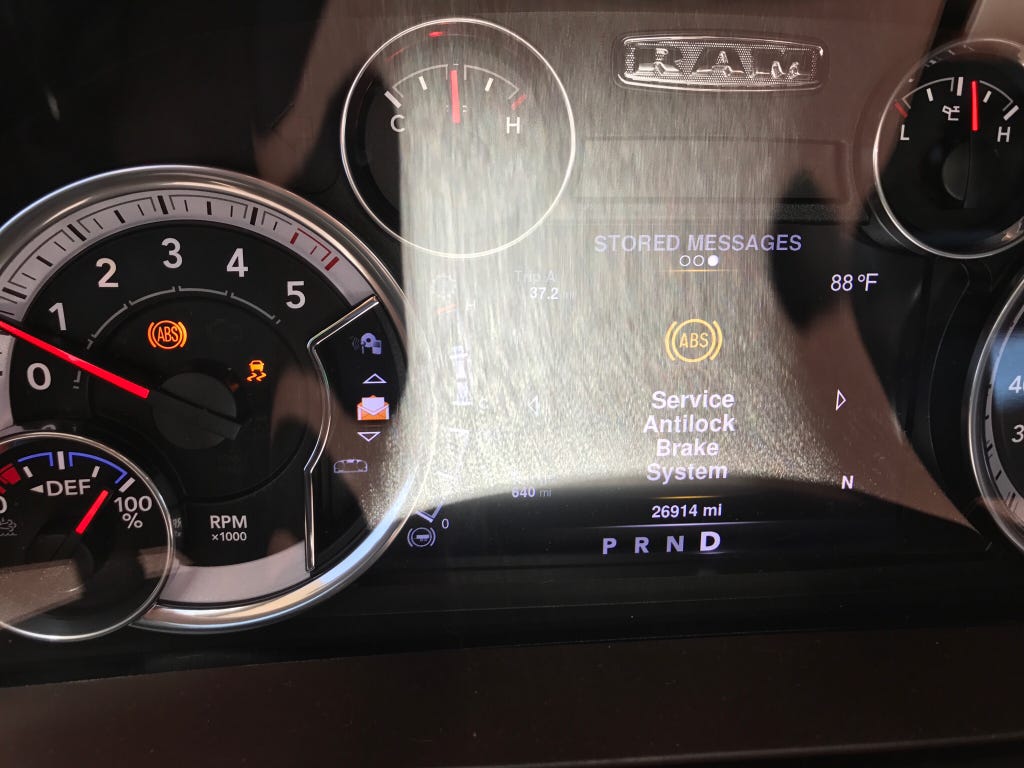
Credit: www.ram1500diesel.com
Frequently Asked Questions
Why Is The Abs Light On In My Truck?
The ABS light indicates a problem with the anti-lock braking system. It could be due to a faulty sensor, low brake fluid, or damaged wiring. A professional diagnosis is recommended to ensure safe braking performance.
Can I Drive With The Abs Light On?
Yes, you can drive, but your ABS system may not function properly. Normal brakes still work, but ABS won’t prevent wheel lock during hard braking. It’s safer to get the issue checked promptly to avoid risks in emergency stops.
What Causes Abs Sensor Failure In Trucks?
ABS sensors can fail due to dirt, debris, corrosion, or damaged wiring. Harsh driving conditions and lack of maintenance also contribute. Regular inspection and cleaning can help prevent sensor failure and keep your ABS system operational.
How Do I Reset The Abs Light On My Truck?
Resetting the ABS light usually requires fixing the underlying problem first. After repair, use an OBD-II scanner to clear the error codes. Disconnecting the battery may temporarily reset the light but won’t fix the actual issue.
Conclusion
The ABS light on your truck warns of a problem with the braking system. Ignoring it can lead to unsafe driving conditions. Checking the sensor, wiring, and brake fluid helps find the issue. A quick visit to a mechanic ensures your brakes work properly.
Keep your truck safe by addressing the ABS light promptly. Don’t wait—your safety depends on it.