
If you want to protect your truck bed from scratches, rust, and wear, spraying a truck bed liner is one of the best solutions. But how do you do it right?
You might think it’s complicated or expensive, but with the right steps, you can achieve a professional-looking finish on your own. In this guide, you’ll discover simple tips and tricks that make the process easy, effective, and even satisfying. Keep reading to learn exactly how to spray your truck bed liner and give your truck the durable protection it deserves.
Preparing The Truck Bed
Proper preparation is key to a strong spray truck bed liner. It helps the liner stick well and last longer. Follow these steps to get your truck bed ready.
Clean, sand, and protect areas around the bed. This makes sure the liner covers only the parts you want.
Cleaning And Degreasing
Start by removing dirt, dust, and grease from the truck bed. A clean surface helps the liner bond better.
Use a strong cleaner or degreaser made for automotive use. Scrub the bed with a brush to remove all grime.
- Spray the degreaser evenly over the bed
- Scrub all corners and crevices carefully
- Rinse with water and let dry completely
Sanding The Surface
Sanding roughens the truck bed surface. This helps the spray liner stick tightly to the metal.
Use medium-grit sandpaper or a sanding tool. Sand all areas where you will spray the liner, including edges.
- Wear safety goggles and a mask
- Sand evenly to avoid deep scratches
- Remove dust with a clean cloth after sanding
Masking Areas To Protect
Cover parts of the truck you do not want to spray. This keeps paint, glass, and trim safe from overspray.
Use painter’s tape and plastic sheets or paper. Seal edges tightly so no liner can seep through.
- Mask the truck bed edges and nearby panels
- Cover the cab windows and lights
- Check the tape holds firmly before spraying
Choosing The Right Bed Liner
Spraying a truck bed liner protects your truck from scratches and rust. Picking the right liner is important for long-lasting results.
Different liners suit different needs. This guide helps you choose the best spray bed liner for your truck.
Types Of Spray Bed Liners
There are several types of spray bed liners. Each type offers unique features and benefits for truck protection.
- Polyurethane Liners:Flexible and smooth finish, good for light to medium use.
- Polyurea Liners:Very tough and fast-drying, ideal for heavy-duty protection.
- Hybrid Liners:Mix of polyurethane and polyurea, offering balanced durability and flexibility.
Selecting Based On Durability
Durability is key for a bed liner. Think about how you use your truck and what kind of wear it faces.
Choose a liner that matches your needs. Tougher liners last longer but may cost more.
- Light use: Polyurethane liners offer enough protection.
- Heavy use: Polyurea liners resist scratches and chemicals.
- Balanced use: Hybrid liners provide good strength and flexibility.
Considering Application Tools
The tools you use affect how well the liner sprays and sticks. Choose tools that fit your skill and liner type.
Some liners need special spray guns or equipment. Make sure you have the right tools before starting.
- Spray guns: Needed for even and smooth application.
- Air compressors: Provide power for spraying.
- Protective gear: Gloves and masks keep you safe during spraying.
Setting Up Equipment
Setting up your equipment correctly is key to a good truck bed liner spray. Proper setup makes the job easier and results better.
Take time to prepare your tools before starting. This saves time and avoids mistakes during spraying.
Spray Gun Selection
Choose a spray gun designed for thick coatings like bed liners. It should handle heavy materials without clogging.
Look for a gun with adjustable pressure and spray pattern. This lets you control the coating thickness and coverage.
- High-volume low-pressure (HVLP) guns work well
- Use a gun with a wide spray nozzle
- Check if the gun supports two-component liners
Mixing And Loading Liner
Mix the liner parts carefully to get an even coat. Follow the product’s instructions for the right ratio.
Pour the mixed liner into the spray gun cup or tank. Avoid bubbles and lumps for smooth spraying.
- Use a clean container for mixing
- Stir slowly to reduce air bubbles
- Mix only what you will use soon
Safety Gear Essentials
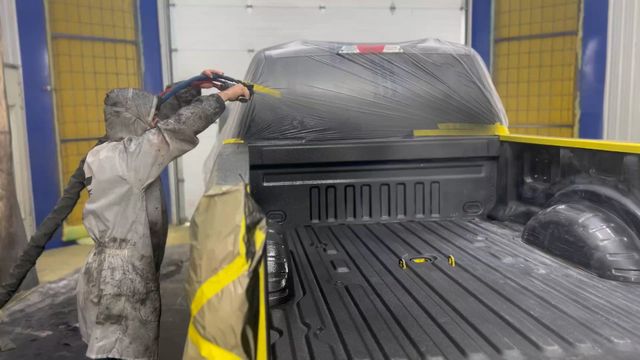
Wear safety gear to protect yourself from chemicals and spray mist. This keeps you safe during the job.
Essential gear includes a respirator, gloves, and goggles. Also, wear coveralls to keep your skin clean.
- Respirator with organic vapor cartridges
- Chemical-resistant gloves
- Safety goggles or face shield
- Protective clothing or coveralls
Credit: www.xtremebodyandpaint.com
Spray Application Techniques
Spraying a truck bed liner needs care and skill. Using the right techniques helps the liner stick and last longer.
Good spray methods also make the surface smooth and even. This guide explains key steps for a proper spray application.
Maintaining Proper Distance
Keep the spray gun at the right distance from the truck bed. Too close causes drips. Too far makes the coat thin.
The best distance is usually between 8 to 12 inches. Hold the gun steady and move it slowly across the surface.
- Hold spray gun 8 to 12 inches away
- Keep a steady hand to avoid uneven spots
- Move at a smooth, steady speed
- Avoid pausing too long in one spot
Applying Even Coats
Spray the liner in thin, even layers. Thick layers cause runs and slow drying. Thin coats dry better and last longer.
Overlap each pass slightly. This helps avoid gaps or missed spots on the truck bed surface.
- Spray thin coats, not thick ones
- Overlap each spray pass by 50%
- Cover all areas evenly
- Apply multiple coats if needed
Managing Drying Times
Let each coat dry before adding the next one. Rushing causes bubbles and weak spots in the liner.
Check the product label for drying times. Make sure the area is dust-free and well-ventilated during drying.
- Wait the recommended time between coats
- Keep the area clean and dust-free
- Use fans or open doors for ventilation
- Do not touch the liner until fully dry
Troubleshooting Common Issues
Spraying a truck bed liner can be tricky. Some problems may happen during application. Knowing how to fix these issues saves time and gives a smooth finish.
Below are common problems and easy ways to solve them. Follow these tips for a better result on your truck bed liner project.
Avoiding Runs And Sags
Runs and sags occur when too much liner is sprayed in one spot. This makes the coating drip or look thick in places. It can ruin the smooth look you want.
To avoid runs and sags, spray in thin, even layers. Keep the spray gun moving steadily. Hold it at the right distance from the surface, usually 6 to 12 inches.
- Spray multiple thin coats instead of one thick coat
- Keep a steady hand and even speed while spraying
- Hold the spray gun at a consistent distance
- Allow each coat to dry before spraying the next
Fixing Uneven Coverage
Uneven coverage happens when some spots get less liner than others. This can leave the truck bed unprotected in some areas.
To fix uneven coverage, check for bare or thin spots after the first coat dries. Spray these areas again with light coats. Use overlapping strokes to cover all surfaces fully.
- Inspect the surface after each coat dries
- Spray missed spots with light, even coats
- Use slow, overlapping passes to avoid gaps
- Keep spray gun pressure consistent
Dealing With Bubbles And Blisters
Bubbles and blisters form when air or moisture gets trapped under the liner. This can cause the coating to lift or peel later.
Prevent bubbles by cleaning and drying the truck bed well before spraying. Avoid spraying in very hot or humid weather. If bubbles appear, lightly sand the area and reapply a thin coat.
- Clean the surface to remove dirt and grease
- Dry the bed completely before spraying
- Spray in cool, dry weather if possible
- Sand and respray any bubbled areas carefully

Credit: www.reddit.com
Curing And Finishing Touches
Spraying a truck bed liner requires careful attention to curing and finishing. Proper curing ensures durability and a smooth surface. Finishing touches add extra protection and a polished look.
Optimal Curing Conditions
The curing process is crucial for the longevity of the truck bed liner. It involves maintaining the right temperature and humidity levels.
| Condition | Optimal Range |
| Temperature | 60°F to 80°F |
| Humidity | 30% to 50% |
Inspecting The Finished Surface
After curing, inspect the surface to ensure a consistent and even finish. Look for areas that may need touch-ups.
- Examine the surface under good lighting.
- Check for bubbles or uneven textures.
- Ensure edges are properly covered.
Adding Protective Layers
Applying protective layers can further enhance the truck bed liner’s durability. These layers offer additional resistance to wear and tear.
- Consider a UV-protective coating.
- Use a clear sealant for added shine.
- Reapply protective layers annually.
Maintenance Tips For Longevity
Spraying a truck bed liner protects your truck from damage. Proper care keeps the liner in good shape for years.
Regular maintenance prevents wear and tear, ensuring your truck bed looks great and functions well.
Cleaning The Liner Safely
Clean the liner regularly to remove dirt and grime. Use gentle soap and water for best results.
Avoid harsh chemicals that might damage the liner. Rinse thoroughly to prevent soap residue.
- Use a soft brush for scrubbing
- Rinse with a garden hose
- Dry with a clean cloth
Repairing Minor Damages
Inspect the liner for small scratches or chips. Prompt repair prevents further damage.
Use a repair kit designed for liners. Follow instructions for a smooth application.
- Clean the area before repair
- Apply repair solution evenly
- Allow proper drying time
Preventing Future Wear
Prevent wear by avoiding sharp objects in the truck bed. Use protective mats for added protection.
Regularly check for signs of wear and address issues early. This approach extends the liner’s life.
- Store heavy items carefully
- Use covers to protect from sun exposure
- Inspect liner monthly
Credit: raptorcoatings.com
Frequently Asked Questions
How Do You Prepare A Truck Bed For Liner Spraying?
Clean the truck bed thoroughly by removing dirt, grease, and rust. Sand the surface to ensure proper liner adhesion. Mask off areas not to be sprayed. Proper preparation prevents peeling and ensures a smooth, durable finish for your truck bed liner.
What Equipment Is Needed To Spray Truck Bed Liners?
You need a spray gun, air compressor, protective gear, and the liner material. Some kits include mixing tools and primers. Using the right equipment ensures an even application and a professional-looking truck bed liner.
How Long Does It Take For A Sprayed Liner To Dry?
Drying time typically ranges from 4 to 24 hours, depending on temperature and humidity. Full curing can take up to 48 hours. Avoid heavy use until the liner is completely dry for maximum durability.
Can I Spray A Truck Bed Liner Myself?
Yes, with proper preparation and equipment, DIY spraying is possible. Follow manufacturer instructions and safety precautions carefully. DIY spraying saves money and allows customization but requires patience and attention to detail.
Conclusion
Spraying a truck bed liner protects your truck and keeps it looking good. Prepare the surface well and apply the liner evenly. Take your time and follow safety steps. A good liner lasts long and resists scratches. You will save money on repairs by doing this job right.
Enjoy a stronger, more durable truck bed every day. Simple steps make a big difference in the end. Try it yourself and see the results.