
Your car’s headliner might seem like a small detail, but it plays a big role in your driving comfort and the overall look of your interior. When it starts sagging or gets stained, it can make your car feel old and worn out.
But don’t worry—you don’t have to spend a fortune getting it fixed. In this guide, you’ll learn exactly how to replace your auto headliner step-by-step. By the end, you’ll have the confidence to refresh your car’s interior yourself, saving time and money while giving your ride a fresh, clean look.
Ready to transform your car? Let’s dive in.

Credit: www.reddit.com
Tools And Materials Needed
Replacing an auto headliner takes some careful preparation. You need the right tools and materials to do the job well.
This guide covers the essential tools and how to choose the right fabric for your car’s headliner.
Essential Tools
Having the right tools makes the replacement easier and faster. Here is a list of tools you will need.
- Screwdrivers (flathead and Phillips)
- Socket wrench set
- Utility knife or scissors
- Spray adhesive designed for headliners
- Wire brush or sandpaper
- Clean cloths or rags
- Protective gloves
- Plastic scraper or putty knife
Choosing The Right Headliner Fabric
Picking a good fabric helps keep your car interior looking great and lasting longer.
| Fabric Type | Features | Best Use |
| Foam-backed knit fabric | Soft, easy to glue, durable | Standard replacement |
| Suede or microfiber | Soft feel, stylish look | Luxury or custom interiors |
| Vinyl | Water-resistant, easy to clean | Heavy use or older vehicles |
| Woven fabrics | Strong, breathable | Classic or vintage cars |
Preparing Your Vehicle
Replacing an auto headliner needs good preparation. You must get your vehicle ready first.
This process helps you work safely and avoid damage to your car’s interior parts.
Removing Interior Components
Start by removing parts that cover the headliner edges. This includes trim, lights, and handles.
Use the right tools like screwdrivers and pry bars. Keep screws and clips safe for reassembly.
- Remove sun visors carefully
- Take down dome lights and switches
- Detach trim panels and moldings
- Keep all fasteners organized
Detaching The Old Headliner
After removing the components, gently pull the old headliner away from the roof. It may be held by clips or adhesive.
Check for any wires or parts attached to the headliner. Disconnect them carefully to avoid damage.
- Release any clips holding the headliner
- Peel off the fabric and board slowly
- Disconnect wiring for lights or sensors
- Remove the old headliner fully from the vehicle
Cleaning And Inspecting
Replacing an auto headliner requires careful cleaning and inspection. This process helps ensure the new headliner sticks well and lasts longer.
First, remove all old adhesive and check the roof surface for any damage. Proper preparation is key to a smooth installation.
Removing Old Adhesive
Old adhesive must be fully removed to create a clean surface for the new headliner. Leftover glue can cause lumps and poor adhesion.
- Use a plastic scraper to gently lift old adhesive
- Apply adhesive remover spray in small sections
- Wipe residue with a clean cloth or paper towel
- Repeat until the surface feels smooth and clean
- Allow the area to dry completely before proceeding
Checking For Damage
Inspect the roof surface for dents, rust, or tears. Damage can cause the new headliner to fail or look uneven.
| Type of Damage | Signs to Look For | Recommended Action |
| Dents | Visible dips or creases | Use filler or repair tools to smooth area |
| Rust | Brown or orange discoloration | Sand and treat with rust inhibitor |
| Tears or Holes | Open spots or cracks | Patch with suitable material before gluing |
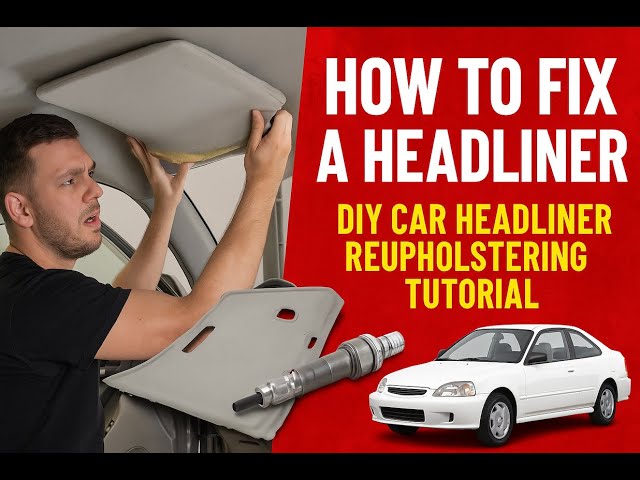
Credit: www.youtube.com
Cutting And Fitting New Fabric
Replacing the auto headliner requires careful cutting and fitting of new fabric. This ensures a smooth and neat finish inside the vehicle.
Proper measurements and trimming help avoid wrinkles and loose spots on the headliner board. Take time to prepare the fabric correctly.
Measuring The Headliner Board
Start by measuring the headliner board accurately. Use a tape measure to get the width and length of the board.
- Place the board on a flat surface for easy measuring.
- Measure the longest and widest points of the board.
- Note any curves or irregular shapes.
- Record all measurements on paper for reference.
Trimming The Fabric
After measuring, lay the fabric flat and place the headliner board on top. Use your measurements to mark the fabric edges.
| Fabric Marking | Measurement |
| Width | Board width + 2 inches for wrapping |
| Length | Board length + 2 inches for wrapping |
| Allowance | Extra fabric for folding and gluing |
Cut the fabric along the marked lines using sharp scissors. Keep the edges clean to avoid fraying.
Tips for fitting fabric:
- Work slowly to avoid stretching the fabric too much.
- Keep the fabric taut but not tight.
- Use adhesive spray on the board before placing the fabric.
- Smooth out any wrinkles as you press the fabric down.
Applying Adhesive And Installing Fabric
Replacing an auto headliner needs careful work. Applying adhesive and installing fabric correctly helps the headliner look smooth and last long.
This guide shows how to pick the right adhesive, apply it step-by-step, and smooth the fabric for a neat finish.
Choosing The Right Adhesive
Select an adhesive made for auto headliners. It should stick well and dry fast. Foam-safe spray adhesives work best.
Use an adhesive that lets you adjust the fabric before it sets. Avoid glues that leave stains or damage the foam backing.
- Choose foam-safe spray adhesive
- Pick a strong, fast-drying glue
- Use adhesive with repositioning time
- Avoid glues that stain or damage foam
Step-by-step Application
Start by cleaning the headliner board. Remove old glue and dirt for better adhesion. Let the surface dry completely.
Spray adhesive evenly on the board and on the fabric’s back side. Wait a few seconds for the glue to become tacky.
- Clean and dry the headliner board
- Spray adhesive on board and fabric
- Wait until glue feels sticky
- Align fabric carefully before pressing
Smoothing And Securing The Fabric
Start pressing the fabric from the center of the board. Push outward to remove air bubbles and wrinkles.
Use a soft cloth or roller to smooth the fabric. Trim any excess fabric around the edges for a clean look.
- Press fabric from center outward
- Remove air bubbles and wrinkles
- Use soft cloth or roller to smooth
- Trim excess fabric carefully
Reassembling The Interior
Replacing an auto headliner requires careful reassembly of the interior. Proper attention ensures everything fits correctly and looks neat.
After installing the new headliner, focus on reattaching all interior components. This ensures safety and restores the car’s original look.
Reattaching Components
Begin by reattaching interior lights and visors. These parts are essential for both function and aesthetics.
- Carefully align the visors with their mounting points
- Ensure all wires for lights are connected securely
- Tighten screws to prevent any loose parts
Final Adjustments
Check the headliner and make necessary adjustments. This step ensures a smooth and even appearance.
Verify all edges are tucked in properly and there are no visible gaps. Inspect your work to confirm everything is secure and looks tidy.
Tips For A Professional Finish
Replacing your car’s headliner can improve its look. Doing it yourself saves money and gives you control over the finish.
With careful steps, you can achieve a smooth and professional result. Here are some tips to help you along the way.
Avoiding Wrinkles And Bubbles
Wrinkles and bubbles can make your headliner look bad. They often happen when the fabric is not laid properly.
To prevent this, work slowly and press the fabric evenly. Use a flat tool to smooth out any bumps as you go.
- Start from the center and move outward
- Apply even pressure with a roller or spatula
- Check for bubbles frequently and fix them right away
Maintaining Your New Headliner
After replacing your headliner, maintenance is key. Keeping it clean will ensure it looks good for years.
Regular cleaning helps to protect the fabric and adhesive. Avoid harsh chemicals that can damage the surface.
- Use a soft brush to remove dust
- Spot clean with a mild detergent
- Keep windows slightly open to avoid moisture buildup

Credit: m.youtube.com
Frequently Asked Questions
How Long Does It Take To Replace An Auto Headliner?
Replacing an auto headliner typically takes 2 to 4 hours. Time depends on vehicle type and your experience. Removing old fabric carefully speeds up the process. Proper preparation and tools also help complete the job efficiently.
What Materials Are Needed To Replace A Car Headliner?
You need headliner fabric, spray adhesive, a scraper, and scissors. Optional tools include a screwdriver and a utility knife. Using high-quality fabric and adhesive ensures a durable, clean finish. Preparing the surface before applying fabric is crucial for adhesion.
Can I Replace The Headliner Myself Or Hire A Professional?
You can replace the headliner yourself if you have patience and basic skills. DIY saves money but requires time and effort. Hiring a professional guarantees expertise and a flawless finish but costs more. Consider your comfort level before deciding.
How Much Does It Cost To Replace An Auto Headliner?
Auto headliner replacement costs range from $150 to $500. DIY kits cost less, around $50 to $150, including materials. Professional services charge more due to labor and expertise. Costs vary based on car model and fabric quality.
Conclusion
Replacing your auto headliner can refresh your car’s interior quickly. Follow the steps carefully and take your time. Small tools and patience make the job easier. Clean surfaces and proper glue help the new headliner stick well. A neat finish improves your car’s look and comfort.
Try this project to save money and learn new skills. Enjoy the fresh, clean feel every time you drive. Simple repairs like this keep your car looking great.