
Understanding your car’s tire size might seem confusing at first. But knowing how to read those numbers and letters on the sidewall can save you money, improve your safety, and help you choose the right tires every time.
You’ll discover a simple way to decode tire sizes quickly and clearly. By the end, you’ll feel confident making smart decisions for your vehicle’s tires. Keep reading—your car (and your wallet) will thank you.

Credit: cheaptiresasap.com
Decoding Tire Size Codes
Tire sizes are written in a code on the tire sidewall. Knowing this code helps you pick the right tires for your vehicle. Each part of the code tells you something important.
This guide explains the main parts of tire size codes. You will learn what tire width, aspect ratio, rim diameter, load index, and speed rating mean.
Tire Width Explained
The tire width is the first number in the code. It shows the width of the tire from sidewall to sidewall. This number is measured in millimeters.
- If the code reads “205/55R16”, the tire width is 205 mm.
- A wider tire gives more road contact and better grip.
- Narrow tires often help with fuel efficiency.
Aspect Ratio Basics
The aspect ratio is the second number in the code. It shows the height of the tire’s sidewall as a percentage of the width.
For example, in “205/55R16”, the aspect ratio is 55. This means the sidewall height is 55% of 205 mm.
Understanding Rim Diameter
The rim diameter comes after the aspect ratio. It tells you the size of the wheel rim that fits the tire. The size is shown in inches.
| Code Example | Rim Diameter | Meaning |
|---|---|---|
| 205/55R16 | 16 | The tire fits a 16-inch rim. |
| 225/45R17 | 17 | The tire fits a 17-inch rim. |
| 195/65R15 | 15 | The tire fits a 15-inch rim. |
Load Index And Speed Rating
The load index and speed rating come after the rim diameter. The load index shows the maximum weight a tire can carry.
The speed rating tells the highest speed the tire can safely handle. These are shown as a number and a letter.
- Load index example: 91 means the tire can hold 615 kg.
- Speed rating example: H means the tire can go up to 130 mph.
- Always choose tires that match or exceed your car’s needs.

Credit: www.counterman.com
Common Tire Size Formats
Auto tire sizes come in different formats. Each format shows specific information about the tire. Knowing these formats helps you pick the right tire for your vehicle.
This guide explains three common tire size formats: Metric, Flotation, and Alphanumeric. Each format has its own way to display tire details.
Metric Sizing
Metric sizing is the most common format for passenger car tires. It uses numbers and letters to show the tire’s width, aspect ratio, and wheel diameter.
- Width:The first number shows the tire’s width in millimeters.
- Aspect Ratio:The second number is the height of the sidewall as a percentage of the width.
- Wheel Diameter:The last number shows the wheel size in inches that fits the tire.
For example, a tire size 205/55R16 means the tire is 205 mm wide, has a sidewall height 55% of 205 mm, and fits a 16-inch wheel.
Flotation Sizing
Flotation sizing is common for off-road and light truck tires. It uses inches for tire width and diameter. It also shows the rim diameter in inches.
| Part | Meaning |
|---|---|
| 35×12.50R15LT | Example tire size |
| 35 | Tire diameter in inches |
| 12.50 | Tire width in inches |
| R15 | Radial tire for 15-inch wheel |
| LT | Light Truck tire |
Alphanumeric Sizing
Alphanumeric sizing uses letters and numbers to show tire width, aspect ratio, and wheel diameter. This format was common before metric sizes became standard.
Here is how to read an alphanumeric tire size like “G78-15”:
- G: Tire width code (letter)
- 78: Aspect ratio (sidewall height to width)
- 15: Wheel diameter in inches
Where To Find Tire Size Information
Tire size information helps you choose the right tires for your vehicle. Knowing where to find this data keeps you safe on the road. You can find tire size details in a few common places.
This guide shows three places to check for tire size info. Each one has clear markings or instructions to help you read the numbers and letters.
On The Tire Sidewall
The tire sidewall shows the size details printed on the rubber. These numbers tell you the width, aspect ratio, and diameter of the tire.
- Look for a series of numbers and letters, like “205/55R16”.
- The first number shows the tire width in millimeters.
- The second number is the aspect ratio or sidewall height as a percentage.
- The letter indicates the tire construction type, usually “R” for radial.
- The last number is the wheel diameter in inches.
Vehicle Door Placard
Open the driver’s side door and look for a sticker on the door frame or edge. This placard lists the correct tire size for your car.
| Information | Details |
| Tire Size | Shows the recommended tire size |
| Cold Tire Pressure | Lists the proper air pressure for front and rear tires |
| Load Rating | Maximum weight the tires can carry |
Owner’s Manual
Your vehicle’s owner’s manual has detailed information about tire sizes. It explains the recommended sizes for different driving conditions.
- Check the tire section for size charts.
- Follow manufacturer advice for tire changes.
- Find details about speed ratings and load indexes.
Why Tire Size Matters
Tire size affects how your car drives and handles. It also changes the safety and fuel use of your vehicle.
Knowing the right tire size helps you pick tires that fit well. This keeps your car working at its best.
Impact On Vehicle Performance
The size of your tires changes how your vehicle performs. Larger or smaller tires can affect speed, handling, and ride comfort.
- Big tires may give better grip but can slow acceleration.
- Small tires improve acceleration but may reduce stability.
- Tire width affects cornering and road contact.
- Sidewall height impacts ride smoothness and shock absorption.
Safety Considerations
Correct tire size helps keep your vehicle safe. Wrong sizes can cause poor braking and increase accident risk.
| Safety Factor | Effect of Wrong Tire Size |
| Braking | Longer stopping distances |
| Handling | Less control on curves |
| Speedometer | Wrong speed readings |
| Load Support | Risk of tire failure |
Fuel Efficiency Effects
Tire size also affects how much fuel your car uses. Bigger tires can cause higher fuel consumption.
Ways tire size affects fuel use:
- Larger tires add weight, using more fuel.
- Wider tires increase road friction, lowering efficiency.
- Tires with high rolling resistance reduce gas mileage.
Tips For Choosing The Right Tire Size
Choosing the right tire size is important for your car’s safety and performance. Tires that fit well help your vehicle drive smoothly and last longer.
Reading tire sizes can be confusing at first. Learning a few tips can help you pick the best size for your car.
Matching Manufacturer Recommendations
Check your vehicle’s manual to find the recommended tire size. Car makers test tires to find the best fit for your model.
Using the right size keeps your speedometer accurate and helps your car handle well.
- Look for size on the inside of the driver’s door
- Check the owner’s manual for tire specs
- Use the exact tire size listed by the manufacturer
Considering Driving Conditions
Think about where and how you drive before picking a tire size. Different sizes work better for city, highway, or off-road driving.
Wider tires may give better grip on dry roads but can be noisy. Narrow tires can help in snow or rain.
- Choose tires with good traction for wet or snowy roads
- Consider tire width and tread type for off-road use
- Match tire size to your usual driving speed and load
Consulting A Tire Professional
Ask a tire expert if you are unsure about sizes. They can help you find tires that fit your car and driving style.
Professionals also know about the latest tire models and can suggest safe and cost-effective options.
- Bring your current tire size information
- Discuss your driving needs and budget
- Get advice on tire brands and warranties
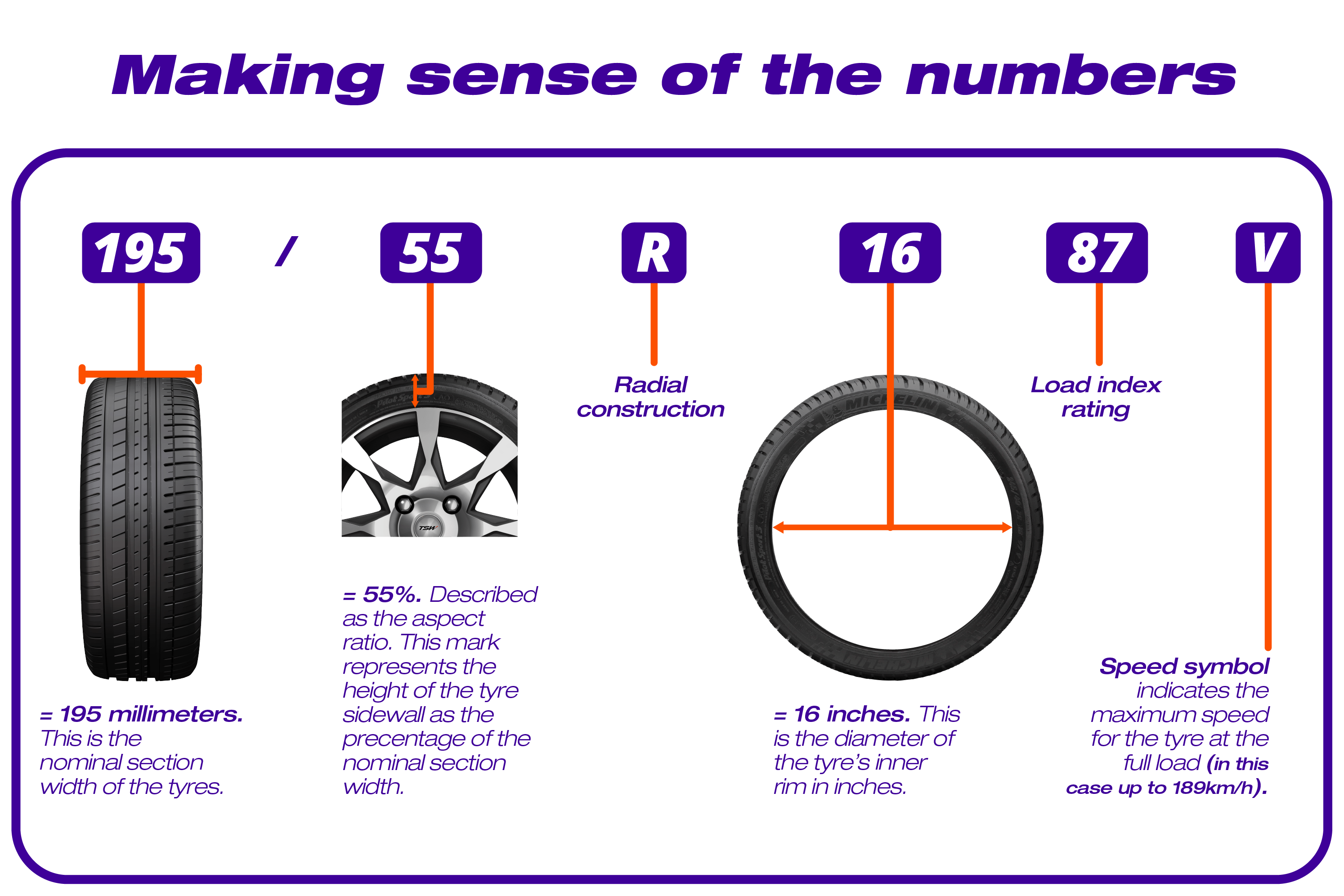
Credit: tyresandmore.com
Frequently Asked Questions
What Do The Numbers On A Tire Size Mean?
The numbers represent tire width, aspect ratio, and diameter. For example, 205/55R16 means 205mm wide, 55% aspect ratio, and 16-inch diameter.
How Can I Identify Tire Width And Height?
The first number indicates tire width in millimeters. The second number shows height as a percentage of width, called the aspect ratio.
What Does The “r” In Tire Size Stand For?
The “R” means radial construction, which is the most common tire design. It indicates the tire’s internal ply cords run radially across the tire.
Why Is Tire Diameter Important To Know?
Tire diameter must match the wheel size for proper fit. Incorrect diameter affects speedometer accuracy and vehicle handling.
Conclusion
Reading tire sizes is easier than it seems. Each number and letter tells you important information. Knowing what they mean helps you choose the right tires. This keeps your car safe and running well. Take a moment to check your tires now.
Understanding these details saves time and money later. Keep this guide handy for quick reference anytime. Your car will thank you for it.