
Are you wondering how to change your auto title in Texas without running into confusing steps? Whether you’ve bought a new car, moved to Texas, or need to update your vehicle’s ownership details, knowing the exact process can save you time and hassle.
In this guide, you’ll find clear, simple instructions that help you navigate the Texas auto title system quickly and confidently. Keep reading, and you’ll discover everything you need to handle your auto title change smoothly—no stress, no guesswork.
Requirements For Changing Auto Title
Changing the auto title in Texas requires following specific rules. You must meet all state requirements before applying.
This guide covers the documents, eligibility, and fees needed to change your vehicle’s title in Texas.
Documents Needed
You must bring certain documents when you apply to change your auto title. These prove your ownership and identity.
- Proof of vehicle ownership, like the current title
- Valid government-issued photo ID
- Completed Application for Texas Title and/or Registration (Form 130-U)
- Proof of insurance that meets Texas requirements
- Payment for title transfer fees
- Odometer disclosure statement if the vehicle is less than 10 years old
Eligibility Criteria
To change your auto title in Texas, you must meet certain conditions. The vehicle must be legally owned by you or the seller.
You must also be a Texas resident or have a legal address in the state. The vehicle must pass any required inspections.
Fees And Costs
| Fee Type | Cost |
| Title Application Fee | $33 |
| Title Transfer Fee | $28 |
| Local County Tax | Varies by county |
| Vehicle Inspection Fee | $7 to $40 |

Credit: swiftautotitleservices.com
Step-by-step Title Change Process
Changing an auto title in Texas is a straightforward process. You need to follow certain steps and submit the right documents. This guide will help you understand what to do.
Make sure you have all the paperwork ready before you start. Filling out the application correctly is important. After that, you can submit your request to the right office.
Gathering Necessary Paperwork
Collecting the correct documents is the first step. You will need proof of ownership and identification. Also, some forms may be required.
- Current vehicle title or registration
- Valid government-issued ID
- Proof of insurance
- Completed Application for Texas Title and/or Registration (Form 130-U)
- Payment for title transfer fees
Filling Out The Application
Complete the application form carefully. Use black or blue ink and print clearly. Check every field before submitting.
| Field | Description |
| Vehicle Information | VIN, make, model, and year |
| Owner Information | Full name and address |
| Odometer Reading | Current mileage of the vehicle |
| Seller’s Signature | Signature of the person transferring the title |
| Buyer’s Signature | Your signature as the new owner |
Submitting Your Request
Take your documents to a local Texas Department of Motor Vehicles office. You can also mail your application. Keep copies for your records.
Follow these tips for submission:
- Visit your nearest county tax office or TxDMV regional service center
- Pay the required title transfer fee in person or by mail
- Get a receipt as proof of submission
- Wait for the new title to arrive by mail
Where To Submit Your Title Change
Changing your auto title in Texas requires submitting your application to the right place. You can choose from several options based on your convenience.
This guide explains where to submit your title change, including local offices, online methods, and mail.
Local County Tax Office
You can visit your local county tax office to submit your title change application. Staff there will help you with the paperwork and payment.
- Find your county tax office location on the Texas Department of Motor Vehicles website.
- Bring required documents like your current title and proof of identity.
- Pay the title transfer fee in person.
- Receive your updated title during the visit or by mail.
Online Options
Texas offers online services for certain title changes. This option saves time and avoids visiting an office.
| Service | Available For | How to Access |
| Title Transfer | Vehicles with no liens | Texas DMV website |
| Duplicate Title Request | Lost or damaged titles | Texas DMV online portal |
| Title Correction | Minor errors on title | Submit form online |
Mailing Your Application
You can mail your title change application to the Texas DMV if you prefer. Follow the instructions carefully to avoid delays.
- Complete the required title application form.
- Include all supporting documents and payment.
- Send your package to the address on the Texas DMV website.
- Keep a copy of all documents for your records.
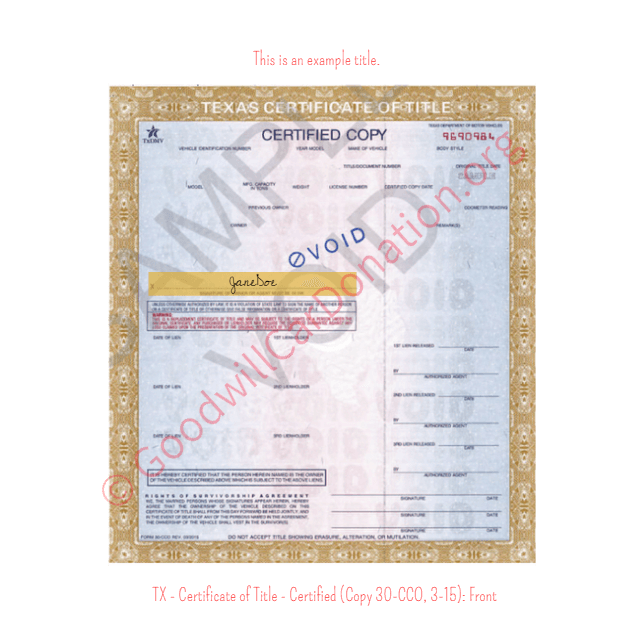
Credit: www.goodwillcardonation.org
Common Issues And How To Avoid Them
Changing an auto title in Texas can be tricky. Many people face problems during the process.
Knowing common issues helps you avoid delays and extra fees. This guide explains what to watch for.
Incomplete Applications
One common problem is submitting an incomplete application. Missing details cause your request to be rejected.
Always fill out every required field clearly. Double-check your form before sending it in.
- Use black or blue ink only
- Include vehicle identification number (VIN)
- Write your full legal name
- Provide correct address and contact info
Incorrect Fees
Paying the wrong fee can delay your title change. Texas has specific fees based on the type of vehicle.
Check the current fee schedule before you pay. Avoid sending cash; use checks or money orders.
- Know the exact fee for your vehicle type
- Include any additional taxes or penalties
- Keep a receipt of your payment
Missing Signatures
Missing signatures on your forms often cause rejection. Both buyer and seller must sign the title.
Make sure all required signatures are present. If you need a notary, get it done before submitting.
- Seller signs the back of the title
- Buyer signs where required
- Notarize documents if needed
Tips For A Smooth Title Change
Changing your auto title in Texas can seem confusing. Following a few simple tips will make the process easier.
This guide covers checking your documents, planning for processing times, and contacting the DMV for help.
Double-check Your Documents
Make sure you have all the correct papers before you start. Missing documents can delay your title change.
- Original title certificate
- Proof of vehicle ownership
- Valid ID such as driver’s license
- Completed Application for Texas Title
- Proof of insurance
- Odometer disclosure statement, if needed
Plan For Processing Times
Texas DMV offices can be busy. Plan your visit or mail your application early to avoid long waits.
| Method | Approximate Processing Time |
| In-Person at DMV | 1 to 2 hours |
| Mail-In Application | 2 to 4 weeks |
| Online Requests | Varies, check DMV site |
Contacting The Dmv For Help
If you have questions, contact the Texas DMV. Staff can guide you through the process and clarify rules.
Here is how you can reach the Texas DMV:
- Phone: 1-888-368-4689
- Website: www.txdmv.gov
- Local offices: Use the online locator tool on the website
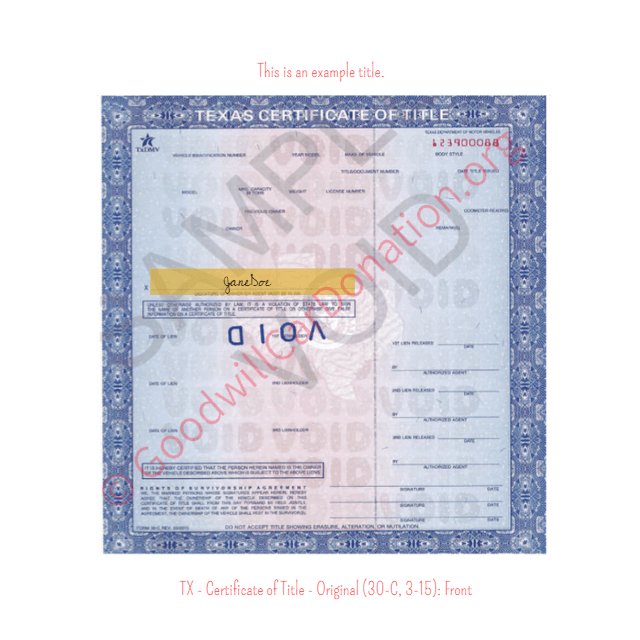
Credit: www.goodwillcardonation.org
Frequently Asked Questions
How Do I Change My Auto Title In Texas?
To change your auto title in Texas, visit your local DMV. Submit the required application, proof of ownership, and pay fees. Follow state guidelines to complete the process efficiently.
What Documents Are Needed To Change An Auto Title In Texas?
You need the original title, a completed application form, valid ID, and proof of insurance. Additional documents may be required depending on your situation.
How Much Does It Cost To Change An Auto Title In Texas?
Title transfer fees in Texas typically range from $28 to $33. Additional fees may apply for late submissions or special requests.
Can I Change My Auto Title Online In Texas?
Texas does not currently allow full title changes online. You must visit a local DMV office or authorized service center to complete the process.
Conclusion
Changing your auto title in Texas is a clear and simple process. Gather all needed documents before you visit the DMV. Pay close attention to each step to avoid delays. Following the rules helps keep your vehicle records correct. Stay patient, and you will finish smoothly.
Now, you know how to handle your Texas auto title with ease. Take action today to keep your vehicle paperwork updated.